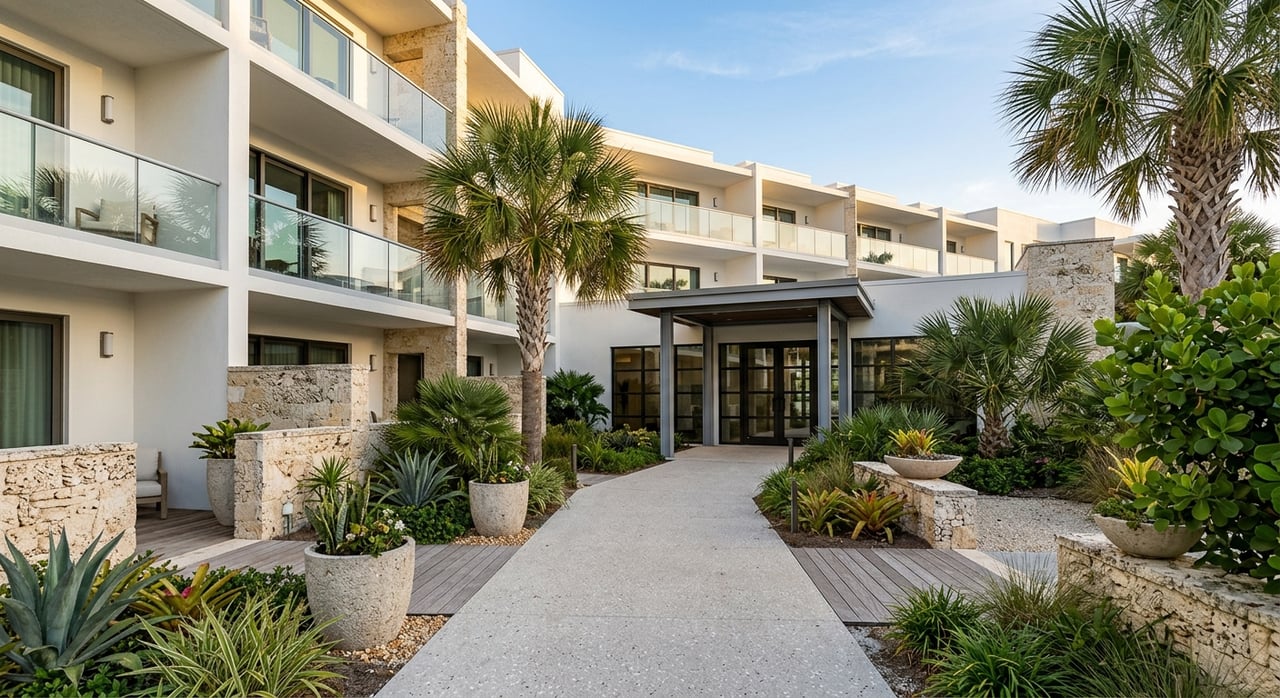
How Port Canaveral Tourism Shapes Cape Canaveral Housing
If you are thinking about buying in Cape Canaveral, it helps to know that the local housing market does not move on beach appeal alone. Port Canaveral cruise traffic, Kennedy Space Center launch tourism, and a condo-heavy housing mix all shape demand in ways that can affect pricing, occupancy patterns, and resale potential. When you understand how those pieces work together, you can make a smarter decision whether you want a second home, a primary residence, or a low-maintenance investment. Let’s dive in.
Port Canaveral is one of the biggest demand drivers in the area, and that influence reaches beyond the port itself. In FY2025, the port reported 8.6 million multi-day passenger movements, 1,038 ship calls, and $218 million in total earned revenues, with cruise business accounting for $182 million.
That level of activity matters because visitors often need a place to stay before or after a cruise. The port reported that 27% of cruise passengers stay overnight in a local hotel, which equals about 2.3 million Brevard County room nights each year. It also noted that new hotel construction in the nearby City of Cape Canaveral increased 200% over the past decade.
For housing, this helps explain why nearby condos and short-stay properties continue to draw interest. A market tied to recurring visitor traffic can create extra demand for units that are easy to maintain and well located near the beach, port, or main travel corridors.
Cape Canaveral is also closely tied to the launch economy. NASA says Kennedy Space Center Visitor Complex offers the closest public viewing of launches, and launch days bring high attendance and heavier traffic across the local area.
That matters because launch visitors do not always behave like quick day-trippers. Brevard tourism officials reported that launch-focused overnight visitors stay 4.8 nights on average and spend $1,107 per trip, while a typical day visitor spends about $239 per person per day.
This creates a second tourism layer on top of cruise demand. Instead of one steady stream, visitor activity tends to come in waves tied to cruise schedules, launch calendars, and seasonal travel campaigns used by Brevard tourism officials.
Cape Canaveral has a very different housing mix than many small Florida beach cities. According to the UF GeoPlan ACS 2019-2023 profile, the city has 8,112 housing units, including 5,724 multi-family units, 1,809 single-family units, and 496 mobile-home units.
That means multi-family housing plays an outsized role here. If you are shopping in Cape Canaveral, you are much more likely to see condos and similar attached properties than a large supply of detached homes.
Value levels also support the idea of a mid-range coastal market with broad appeal. The UF profile places the median housing value at $355,000, while Census QuickFacts reports a 2020-2024 median owner-occupied value of $372,400.
A condo-heavy market often aligns well with a tourism-driven location. Many buyers looking near Port Canaveral want a property that is simple to maintain, easy to lock and leave, and practical for part-time use.
That is why condos often stand out in Cape Canaveral. Based on the city’s housing mix and the area’s tourism patterns, low-maintenance units near the beach, port, or launch-viewing corridors are often the clearest fit for second-home buyers and small investors.
This does not mean every condo performs the same way. Building rules, location, layout, parking, and ease of access can all shape how appealing a unit is for personal use, resale, or rental demand.
Even with all the tourism activity, Cape Canaveral is not just a visitor market. Census QuickFacts reports a 58.6% owner-occupied housing unit rate, along with 6,061 households and an average of 1.65 persons per household.
Those numbers point to a city with a meaningful year-round resident base. QuickFacts also shows that 81.8% of residents lived in the same house one year earlier, which suggests stability beneath the visitor economy.
Population figures reinforce that point. The city had 9,972 residents in 2020, 10,014 in the 2024 estimate, and 9,962 in the 2025 estimate, showing a relatively steady population rather than sharp swings.
In a coastal market like Cape Canaveral, vacancy numbers need context. The Census Bureau notes that vacant housing can include units held for seasonal use or occasional use, especially in resort-oriented areas.
So when you hear about vacancy in this type of market, it does not always signal weak demand. It can also reflect second homes, part-time occupancy, or units used only during certain seasons.
That is important if you are comparing Cape Canaveral to a more traditional suburban market. A unit that sits empty part of the year may still be serving its intended purpose for an owner who uses it seasonally.
Tourism can support housing demand, but it also brings more competition. Brevard tourism officials said hotel inventory reached 11,269 rooms as of June 2025, while room-night demand rose to 2.66 million in 2024 from 2.55 million in 2023.
At the same time, vacation-rental inventory grew from 3,800 units in 2021 to more than 9,000 currently. Officials also said vacation rentals now generate roughly one-third of tourist development tax collections.
That tells you two things at once. First, visitor demand is strong enough to support a large and growing lodging ecosystem. Second, buyers who hope to benefit from short-stay demand should know they are entering a more competitive environment than they would have a few years ago.
Recent county tourism data shows a mixed picture that matters for anyone thinking about rental potential. Brevard officials noted that 2024 hotel revenue was flat compared with 2023, average daily rate rose 4%, and occupancy declined 5%.
For housing buyers, the takeaway is simple. Strong tourism does not guarantee strong performance for every property.
Instead, results are likely to depend on details such as location, unit type, price point, and how well the property matches visitor needs. In Cape Canaveral, that often means practical, well-kept, low-maintenance units in the right spot may have a clearer advantage than properties that miss on convenience or layout.
If you want a second home, Cape Canaveral offers a layered demand story. You have a stable resident base underneath the market, plus recurring demand spikes from cruises, launches, and seasonal travel.
That mix can be appealing because it supports both lifestyle use and long-term market interest. You are not buying into a place that depends on just one source of activity.
It also means you should think carefully about your own goals. If your priority is easy ownership and flexible use, a condo near the beach or port may line up better with the market than a higher-maintenance property that is less connected to the area’s visitor patterns.
For small investors, Cape Canaveral can make sense as a market with both baseline stability and tourism-driven upside. The city’s owner base, steady population, and large multi-family inventory create a different profile than a purely transient vacation market.
At the same time, it is important to stay realistic. Growing hotel supply and a major jump in vacation-rental inventory mean you should evaluate each property on its own merits instead of assuming demand alone will carry performance.
In practical terms, the best fit is often a property that can work in more than one way. A unit that serves your personal use, appeals to future buyers, and fits short-stay demand patterns may give you more flexibility over time.
Port Canaveral tourism shapes Cape Canaveral housing by creating recurring waves of demand that interact with a condo-heavy market. Cruise passengers, launch visitors, and seasonal travelers all add activity that helps explain why low-maintenance coastal properties attract so much attention.
But the story is not just tourism. The city also has a stable year-round population and a majority owner-occupied housing base, which gives the market a steadier foundation than many people expect.
If you are considering buying or selling in Cape Canaveral, the real opportunity is in understanding both sides of that equation. When you match the property type to the way this market actually works, you can make a move with more confidence.
If you want help evaluating condos, second homes, or coastal investment opportunities in Cape Canaveral, connect with Edgar Rodriguez for local, bilingual guidance tailored to your goals.
Whether you're buying, selling, or investing, he’s ready to guide you every step of the way—with integrity, care, and a deep commitment to your goals.
Edgar Rodriguez
Address
6022 Farcenda Pl Ste 101
Melbourne FL 32940